
Lighting plays a crucial role in human health, productivity, and emotional well-being. Traditional office lighting often prioritizes energy efficiency and brightness over physiological and psychological impacts. However, human-centric lighting (HCL)—a concept that aligns artificial lighting with natural circadian rhythms—is transforming modern workspaces. By mimicking the dynamic changes of daylight, HCL enhances employee well-being, focus, and performance.
The Science Behind Human-Centric Lighting
Human circadian rhythms are regulated by light exposure, particularly blue light (480 nm wavelength), which suppresses melatonin (the sleep hormone) and promotes alertness. Natural daylight shifts from cool (blue-enriched) in the morning to warm (red-shifted) in the evening. Unfortunately, conventional static office lighting disrupts this cycle, leading to:
Sleep disturbances (due to excessive evening blue light)
Eye strain & fatigue (from harsh, unchanging lighting)
Reduced concentration & mood swings
HCL addresses these issues by dynamically adjusting color temperature (CCT) and intensity throughout the day:
Time of Day | Lighting Characteristics | Biological Effect | Morning (8 AM - 12 PM) | Cool white (5000K - 6500K), high intensity | Boosts alertness & cortisol | Afternoon (1 PM - 5 PM) | Neutral white (4000K - 5000K) | Sustains focus | Evening (6 PM onwards) | Warm white (2700K - 3000K), dimmed | Promotes relaxation & melatonin release |
Benefits of Human-Centric Lighting in Workspaces
1. Enhanced Productivity & Focus
Studies show that employees under HCL exhibit:
12-15% faster cognitive performance (Harvard research)
Reduced errors in tasks (especially in detail-oriented work)
Better sustained attention (fewer mid-afternoon energy crashes)
2. Improved Sleep Quality & Mental Health
Workers exposed to proper daytime lighting report better sleep at night.
Reduced risk of seasonal affective disorder (SAD) and workplace stress.
3. Reduced Eye Strain & Headaches
Flicker-free LED lighting with tunable CCT minimizes glare and discomfort.
Automatic dimming prevents over-illumination, reducing digital eye strain.
4. Energy Efficiency & Cost Savings
Smart HCL systems use occupancy sensors & daylight harvesting to optimize energy use.
Can reduce lighting electricity costs by 20-30% compared to traditional setups.
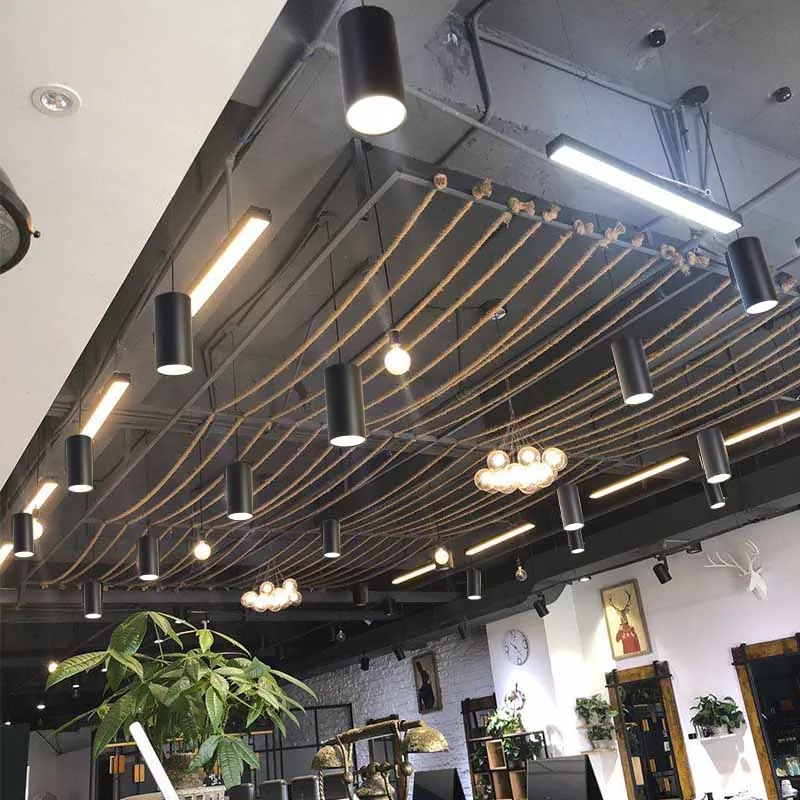
Implementing Human-Centric Lighting
1. Smart Lighting Systems
Tunable White LEDs: Allow manual or automated CCT adjustments.
IoT-Enabled Controls: Systems like Philips Hue, Lutron, or Sengled sync with work schedules.
Biometric Integration: Some advanced setups adjust lighting based on employee wearables (e.g., smartwatches tracking fatigue).
2. Natural Light Optimization
Maximize windows & skylights to allow daylight penetration.
Use automated blinds to reduce glare while maintaining brightness.
3. Employee-Centric Customization
Allow workers topersonalize their desk lightingvia apps.
Providetask lightingfor focused work andambient lightingforrelaxation zones.
Future Trends in HCL
AI-Powered Lighting: Systems that learn individual preferences.
Circadian LED Panels: Ceiling tiles that simulate sunrise/sunset.
Health Monitoring via Light: Research on using light to track stress & fatigue levels.
Human-centric lighting is more than a trend—it’s a health-driven revolution in workspace design. By aligning artificial light with natural biological needs, companies can boost productivity, enhance well-being, and reduce energy waste. As technology advances, HCL will become a standard in offices, schools, and healthcare facilities, proving that the right light doesn’t just illuminate—it heals, energizes, and inspires.